


Coral Bleaching.
 Tools
Tools Tools
Tools
Plass-Johnson, Jeremiah G., Cardini, Ulisse, van Hoytema, Nanne, Bayraktarov, Elisa, Burghardt, Ingo, Naumann, Malik S. and Wild, Christian (2014) Coral Bleaching. In: Environmental indicators. , ed. by Armon, Robert H. and Hanninen, Osmo. Springer, Dordrecht, pp. 117-146. ISBN 978-94-017-9498-5 DOI https://doi.org/10.1007/978-94-017-9499-2_9.
![[img]](http://cris.leibniz-zmt.de/style/images/fileicons/text.png) |
Text
Plass-Johnson.pdf - Published Version Restricted to Registered users only Download (4MB) |
Abstract
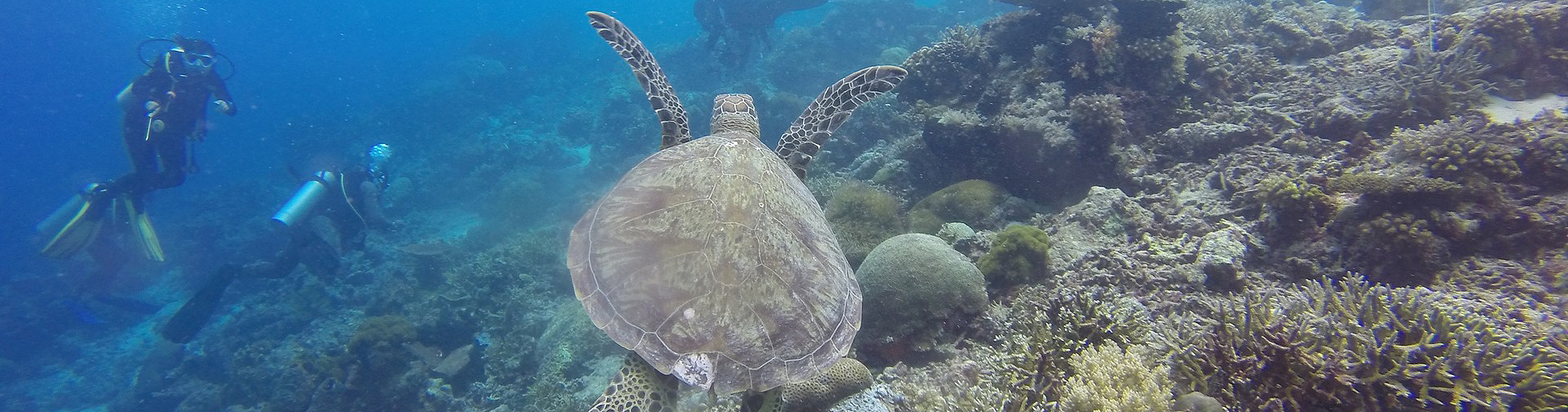
Bleaching of corals (reversible loss of endosymbiotic zooxanthellae) is an unspecific indicator for a range of environmental stressors including too high or too low water temperatures, sedimentation, high irradiance or turbidity, mechanical disturbance, or infection by microbial pathogens. Coral bleaching may result in the death of affected corals depending on the severity and duration of the environmental stressor that induced bleaching. We know that the frequency and extent of high temperature-induced coral bleaching increased over the last century with recent large-scale events and resulting mass coral mortality in the Indian Ocean (1998), the Pacific Ocean (2002), the Caribbean (2005), and even all the world oceans (1998 and 2010). This may lead to major changes in the benthic community composition (i.e., phase shifts) of coral reefs and pronounced modifications of biogeochemical cycles that support coral reef functioning.
| Document Type: | Book chapter |
|---|---|
| Programme Area: | PA Not Applicable |
| Research affiliation: | Coral Reef Ecology |
| Document Access: | Closed access |
| DOI: | https://doi.org/10.1007/978-94-017-9499-2_9 |
| Date Deposited: | 08 Aug 2019 16:00 |
| Last Modified: | 19 May 2026 16:38 |
| URI: | https://cris.leibniz-zmt.de/id/eprint/2514 |
Actions (login required)
 |
View Item |